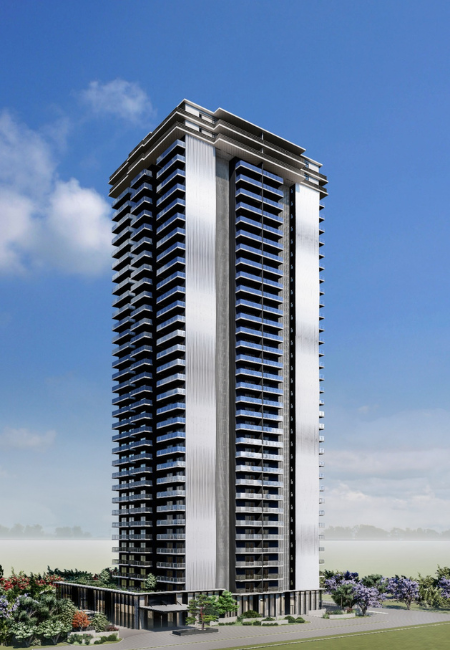
NRI's Guide to Buying at Krisumi City, Gurgaon
Buying property in India from abroad comes with a specific set of rules, documentation requirements, and practical challenges that don’t apply to resident buyers — and getting them wrong can cost you time, money, or in the worst case, complicate your ownership later. If you’re an NRI considering a home at Krisumi City in Sector 36A, this guide walks through exactly what you need to know, from funding rules to remote site visits.

Why Krisumi City Appeals to NRI Buyers Specifically
Krisumi City has attracted a meaningful share of NRI interest for reasons that go beyond the usual “Gurgaon is booming” pitch:
- An internationally recognisable developer partnership — Sumitomo Corporation (Japan) alongside Krishna Group (India) — which tends to reassure buyers who can’t easily do in-person diligence on a purely domestic developer.
- Design and construction standards benchmarked to Japanese quality expectations, a point of comfort for NRIs comparing Indian real estate against markets with more standardised construction norms.
- A branded, masterplanned community rather than a standalone tower, which typically means better long-term upkeep of common areas and clubhouse facilities — a common concern for NRI owners who won’t be physically present to monitor maintenance.
- Strong rental demand potential in the surrounding Cyber City/Cyber Hub employment corridor, relevant for NRIs planning to rent the property out rather than use it immediately.
Can NRIs Legally Buy Property at Krisumi City?
Yes. Under the Foreign Exchange Management Act (FEMA), NRIs (Non-Resident Indians) and OCIs (Overseas Citizens of India) are permitted to purchase residential and commercial property in India without needing prior approval from the Reserve Bank of India, with one key restriction: NRIs cannot purchase agricultural land, plantation property, or farmhouses — this doesn’t affect a residential apartment purchase like those at Krisumi City, but it’s worth knowing if you’re also considering land or plot investments elsewhere in the region.
Funding Your Purchase: What NRIs Need to Know
1. Payment must come through proper banking channels. Funds for the purchase must be routed through an NRE (Non-Resident External), NRO (Non-Resident Ordinary), or FCNR (Foreign Currency Non-Resident) account — not through informal channels or cash. Keep clear documentation of the fund transfer for both compliance and future resale purposes.
2. Home loans are available to NRIs, but through a different process. Most major Indian banks and housing finance companies offer NRI-specific home loan products, typically requiring proof of overseas income, employment, and a Power of Attorney (POA) arrangement for someone to represent you in India during the loan process, since in-person visits for every formality often aren’t practical.
3. Repatriation of proceeds has specific rules. If you plan to eventually sell the property and repatriate the proceeds abroad, current FEMA rules generally allow repatriation of sale proceeds for up to two residential properties, subject to conditions — including that the original purchase was made through NRE/FCNR funds or an equivalent route. It’s worth understanding this at the time of purchase, not just at the time of sale, since your initial funding route can affect repatriation flexibility later.
Documentation You'll Need
At minimum, expect to provide:
- Valid passport and visa/OCI card (as applicable)
- PAN card — mandatory for any property transaction in India
- Overseas address proof and Indian address proof, if applicable
- NRE/NRO/FCNR bank account details for the transaction
- Power of Attorney (POA), if you’re not physically present in India to sign documents or oversee possession — this should be drafted carefully by a qualified property lawyer and typically needs to be notarised/apostilled depending on your country of residence
- Income proof (salary slips, tax returns, or equivalent), particularly if applying for a home loan
Step-by-Step: How the Purchase Process Typically Works for NRIs
1. Shortlist and verify the project. Confirm the project’s RERA registration directly on the Haryana RERA portal (haryanarera.gov.in), and review the developer’s track record — for Krisumi City, this includes checking the specific phase (Forest Reserve, Waterside Residences, or Waterfall Residences) you’re considering, since each has its own registration and construction status.
2. Arrange a remote or in-person site visit. Many NRI buyers arrange a detailed video walkthrough of the sample flat and site before travelling, followed by an in-person visit during a trip back to India before finalising. If an in-person visit isn’t feasible before booking, request a comprehensive, recent video walkthrough and ask specific questions about construction progress, not just the marketing video.
3. Execute a Power of Attorney, if needed. If you can’t be physically present for every step — booking, agreement signing, possession — a POA lets a trusted representative (often a family member) act on your behalf. Have this drafted by a lawyer familiar with NRI property transactions specifically, since generic POA templates often miss India-specific requirements.
4. Complete the booking and payment through proper banking channels. Ensure every payment is traceable through your NRE/NRO/FCNR account, and retain all transaction records.
5. Register the property. Property registration in India generally requires either your presence or your POA holder’s presence at the sub-registrar’s office, along with payment of applicable stamp duty and registration charges.
6. Plan for post-purchase compliance. Keep records of the purchase for future tax filing (both in India and your country of residence, where applicable — consult a cross-border tax advisor, since rules vary significantly by country) and for eventual repatriation planning if you intend to sell later.
Common Mistakes NRI Buyers Should Avoid
- Skipping independent RERA verification and relying solely on broker or developer claims about registration status.
- Using informal fund transfer channels instead of proper NRE/NRO/FCNR banking routes, which can complicate both the transaction and future repatriation.
- Drafting a generic Power of Attorney without NRI-specific legal guidance, leading to complications during registration or possession.
- Not budgeting for currency fluctuation between the time of booking and final payment, particularly on longer construction-linked payment plans.
- Assuming rental management will be automatic — if you plan to rent out the property, arrange a property management service or a trusted local contact in advance, since managing tenants remotely without support is a common pain point for NRI owners.
- Not consulting a cross-border tax advisor early — both Indian and your country-of-residence tax obligations can apply to rental income and eventual capital gains, and rules differ significantly by country.
Why a Combined Approach Works Well for NRI Buyers at Krisumi City
- Given that Krisumi City spans multiple phases — The Forest Reserve, Waterside Residences, and Waterfall Residences — NRI buyers often benefit from comparing all three before committing, since configuration needs (a compact 2 BHK for eventual return, versus a larger family home) can differ significantly from a resident buyer’s typical priorities. See our full comparison of Krisumi’s three residential lines to understand which phase best matches your specific situation — whether you’re buying for eventual relocation, as a long-term investment, or purely for rental income.
Get Remote-Friendly Support for Your Purchase
Buying from abroad doesn’t have to mean navigating this process alone. Share your requirement through the enquiry form on our Krisumi City homepage, and our team can:
- Arrange a detailed video walkthrough of your preferred project and configuration
- Coordinate with your Power of Attorney holder in India for site visits and documentation
- Share current price sheets, brochures, and RERA details for any Krisumi City phase
- Help you understand payment plan options that work with NRE/NRO/FCNR funding timelines
— Book a Site Visit or Request the Brochure
Get the latest price list, floor plans and site-visit slots.
Numbers and renders only tell part of the story. The best way to understand what makes Krisumi Waterfall Residences different is to walk the towers, see the clubhouse scale in person, and get a feel for how the landscaping ties the whole project together.
Frequently Asked Questions
Q: Can NRIs buy property at Krisumi City, Gurgaon?
Yes. Under FEMA rules, NRIs and OCIs can purchase residential property in India, including at Krisumi City, without prior RBI approval, subject to standard documentation and banking-channel requirements.
Q: Do NRIs need to be physically present in India to buy a Krisumi City property?
Not necessarily — a Power of Attorney can be used to authorise a representative in India to complete booking, documentation, and possession formalities on your behalf, though many NRI buyers do plan at least one in-person visit before or shortly after purchase.
Q: Can NRIs get a home loan for a Krisumi City property?
Yes, most major Indian banks and housing finance companies offer NRI-specific home loan products, typically requiring proof of overseas income and a Power of Attorney arrangement for the in-India process.
Q: What bank account do I need to fund the purchase as an NRI?
Payments should be routed through an NRE, NRO, or FCNR account rather than informal channels, both for compliance and to preserve future repatriation options.
Q: Can NRIs repatriate the sale proceeds if they later sell their Krisumi City property?
Generally yes, subject to FEMA conditions — current rules typically allow repatriation of sale proceeds for up to two residential properties, provided the original purchase was funded through NRE/FCNR routes or an equivalent method. Confirm current rules with your bank or a qualified advisor, since regulations can be updated.
Q: Is a Power of Attorney mandatory for NRI buyers?
Not mandatory, but highly recommended if you can’t be physically present for every step of the purchase, documentation, and possession process — have it drafted by a lawyer experienced in NRI property transactions.
Q: How do I verify a Krisumi City project's RERA status from abroad?
You can check the project’s registration and current status directly on the Haryana RERA portal (haryanarera.gov.in) from anywhere, without needing to be in India.
Q: Which Krisumi City project is best suited for NRI buyers?
This depends on intended use — Waterside Residences’ wider configuration range suits buyers still deciding on unit size, Forest Reserve suits those prioritising space and exclusivity for eventual relocation, and Waterfall Residences suits those wanting the most established, longest-tracked project. See our full project comparison for details.
Q: Can I manage a rental property at Krisumi City remotely as an NRI?
Yes, though it’s advisable to arrange a property management service or a trusted local contact in advance, since remote tenant management without local support is one of the most common pain points for NRI property owners.
Q: What tax obligations should NRI buyers be aware of?
Both Indian tax rules (on rental income and eventual capital gains) and your country of residence’s tax rules may apply, and these vary significantly by country — consult a cross-border tax advisor before and after your purchase to plan appropriately.
This guide is intended for general informational purposes and does not constitute legal, financial, tax, or investment advice. FEMA rules, RBI guidelines, and tax regulations affecting NRI property purchases are subject to change and can vary based on your country of residence. NRI buyers are strongly advised to consult a qualified property lawyer and a cross-border tax advisor before making any purchase decision.

Krisumi The Forest Reserve Brochure Download | Sector 36A, Gurgaon
Home Krisumi The Forest Reserve Brochure: What’s Inside and How...
Read More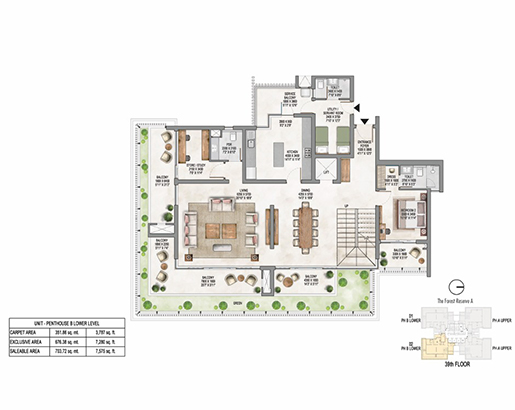
Krisumi The Forest Reserve Floor Plan | 3 & 4 LDK Layouts, Sector 36A
Home Krisumi The Forest Reserve Floor Plan: A Configuration-Wise Guide...
Read More
Krisumi The Forest Reserve Price 2026 | Sector 36A, Gurgaon
Home Krisumi The Forest Reserve Brochure Download | Sector 36A,...
Read More
Krisumi vs Signature Global vs M3M: Dwarka Expressway Homes
Home Krisumi vs Signature Global vs M3M — Luxury Homes...
Read More