
Krisumi Waterfall Residences Resale Guide: Price & Checklist
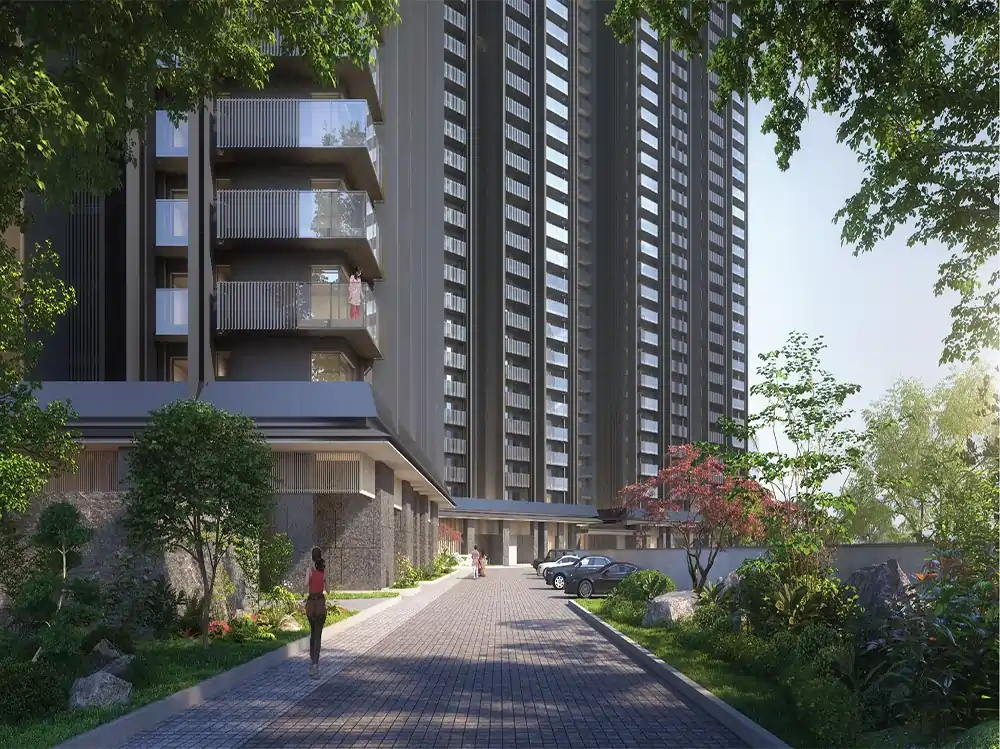
Home Krisumi Waterfall Residences Resale Guide: Price Trends & What to Check As the earliest phase in the Krisumi City masterplan, Krisumi Waterfall Residences is now the project within Sector 36A with the longest visible ownership history — which means it’s also the first Krisumi project where a genuine resale market is starting to take shape. If you’re considering a second-sale unit here rather than buying directly from the developer, this guide walks through what actually drives resale pricing, what to inspect before you commit, and the questions your channel partner or broker should be able to answer confidently. Why Buy Resale at Krisumi Waterfall Residences Instead of a New Launch? Resale isn’t right for every buyer, but it has real advantages for certain profiles: You can often move in sooner — a resale unit that’s ready or near-ready removes years of construction-linked waiting that a fresh launch involves. You can physically inspect the actual apartment, tower views, and finished common areas — rather than relying on renders and a sample flat. You get real data on how the project has aged — how the clubhouse is being maintained, how construction quality has held up, and how the surrounding masterplan has actually developed, not just how it was promised. Negotiation room can exist, particularly with individual sellers who may be more flexible on price and terms than a developer’s fixed price list. The trade-off: you typically lose access to the flexible construction-linked payment plans developers offer on new inventory, and due diligence becomes more your own responsibility rather than the developer’s. What Actually Drives Resale Price at Krisumi Waterfall Residences 1. Tower and floor. As with any high-rise, higher floors with unobstructed views of the internal water features or landscaping typically command a premium over lower or side-facing units, even within the same configuration. 2. Furnishing status. Krisumi Waterfall Residences was offered in standard, semi-furnished, and fully furnished formats. A fully furnished resale unit in good condition can justify a meaningfully higher price than a bare-shell unit of the same size — but only if the furnishing quality and condition genuinely hold up, which is why a physical inspection matters more here than almost anywhere else. 3. Configuration. 2 BHK, 3 BHK, 3 BHK+Study, and penthouse (including penthouse-with-private-pool) units each have distinct resale demand pools. Penthouses, being the least numerous, can see wider price swings — both upside and downside — depending on the specific buyer pool at the time you’re selling or buying. 4. Construction and possession status. Given the project’s multi-year construction timeline, resale units at different points in the completion cycle (near-possession vs. still some years out) will be priced very differently. Always confirm the actual current construction stage rather than relying on a listing’s stated status. 5. Broader Sector 36A and Global City progress. As covered in our Sector 36A investment outlook, the pace of Global City’s infrastructure build-out directly affects sentiment and pricing across the whole corridor, including resale values at Krisumi Waterfall Residences. 6. Maintenance and clubhouse upkeep. For a project built around a large-format clubhouse experience (the roughly 36,000 sq. ft. “Sudare”-themed clubhouse), how well that amenity space has been maintained since handover materially affects buyer perception and, therefore, resale value — a project with a well-run RWA/management company tends to hold value better than one with visible maintenance lapses. A Practical Checklist Before Buying Resale Before you commit to any resale unit at Krisumi Waterfall Residences, confirm the following: Original builder-buyer agreement and payment history — ensure the seller has cleared all dues to the developer, with no pending demand notices. RERA registration status of the specific tower/phase, verified independently on the Haryana RERA portal. No-objection certificate (NOC) from the developer for transfer of ownership, where applicable. Actual physical condition of the unit — inspect for water seepage, finish quality, fittings condition, and whether any modifications were made without approval. Maintenance charges and any outstanding dues owed to the RWA or facility management company. Parking allocation — confirm the number and location of allotted parking slots transfer with the unit. Loan/mortgage status — confirm whether the unit is mortgaged, and if so, ensure a proper release/no-dues process is followed at the time of sale. Stamp duty and registration costs for a resale transaction, which differ from a fresh-purchase transaction and should be factored into your total cost. Society/RWA rules on renting, renovation, and pet policies if relevant to your plans. Actual clubhouse and common area condition, verified by a physical visit rather than photos supplied by the seller or broker. Questions to Ask Your Broker or Channel Partner A serious resale conversation should be able to answer these clearly: What is the exact tower, floor, and unit number, and can I see the layout plan? What is the current construction/possession status of this specific tower? Is the seller the original allottee, or has this unit already changed hands once before? Are there any pending payments, legal notices, or disputes on this unit? What is the current RERA-registered carpet area versus the super built-up area being quoted? What is included in the quoted price — furnishing, parking, club membership, or these separately priced? What has the maintenance charge trend been since possession, if applicable? If your broker can’t answer these directly and confidently, treat that as a signal to slow down and verify independently before proceeding. How Resale Compares to Buying Directly From the Developer If Krisumi Waterfall Residences still has fresh inventory available directly from the developer, it’s worth comparing both routes side by side: Resale Purchase Direct from Developer Payment structure Typically full/lump-sum, less flexible Often construction-linked or 75:25-style plans Unit visibility Physical inspection possible Sample flat / renders only, if under construction Price negotiation More room with individual sellers Largely fixed, per current price sheet Documentation complexity Higher (transfer, NOC, dues clearance) Simpler (direct builder-buyer agreement) Possession timeline Often sooner, or immediate if ready Tied to construction schedule Neither route is inherently better — it depends on your
Is Sector 36A Dwarka Expressway a Good Investment in 2026?
Home Is Sector 36A Dwarka Expressway a Good Investment in 2026? Every buyer researching Gurgaon real estate right now eventually asks the same question: is the Dwarka Expressway still worth it in 2026, or has the appreciation story already played out? And within that corridor, is Sector 36A specifically a smart bet, or just one of many sectors riding the same wave? This isn’t a “buy now” pitch. It’s a straightforward look at the actual infrastructure, government data, and market signals that should inform your decision — so you can make the call with real information instead of sales-pitch enthusiasm. The Case For: What’s Actually Driving Sector 36A Right Now 1. The Global City project is a genuine, government-backed catalyst. Sector 36A sits directly beside the Haryana government’s Global City project — a 1,000+ acre, HSIIDC-executed mixed-use township spanning Sectors 36, 36B, 37, and 37B. This isn’t a private developer’s marketing plan; it’s a state-government infrastructure initiative with a confirmed budget of roughly ₹940 crore for Phase 1 alone, covering roads, drainage, power, and water infrastructure across 587 acres. As of early 2026, the government has publicly targeted December 2026 for Phase 1 completion, with the full township envisioned to be built out over the following decade. For property values, government-backed infrastructure spend of this scale — roads, utilities, and eventually an internal mass transit system — tends to be one of the more reliable long-term catalysts in Indian real estate, precisely because it isn’t dependent on any single developer’s execution. 2. Documented price appreciation over the past several years. Multiple market trackers covering the Dwarka Expressway corridor have noted that property prices in and around the belt have shown sustained multi-year appreciation, with some analyses pointing to prices roughly doubling over a four-year period as connectivity and Global City groundwork progressed. While any single statistic should be treated with some caution, the direction — consistent upward movement tied to visible infrastructure progress — has been a consistent theme across independent sources. 3. Best-in-class road connectivity, already operational. Unlike Global City itself, which is still under construction, the Dwarka Expressway is already a functioning 8-lane corridor connecting Sector 36A directly to NH-48, Delhi, and IGI Airport. This means Sector 36A residents already benefit from strong connectivity today, rather than waiting years for infrastructure to catch up — a meaningfully different risk profile than sectors where appreciation depends entirely on future, unbuilt infrastructure. 4. Diversified developer interest, not a single-project bet. Sector 36A and its immediate neighbourhood have attracted a range of established developers — Krisumi Corporation, Signature Global, M3M, and others have all launched or planned projects along this stretch. When multiple credible developers commit significant capital to the same micro-market, it’s generally read as a market-wide vote of confidence rather than one company’s isolated gamble. The Case For Caution: What Buyers Should Genuinely Weigh 1. Global City’s full build-out is a long-horizon story. While Phase 1 infrastructure is targeted for completion by the end of 2026, the complete township — including its more ambitious elements — is publicly targeted for delivery around 2035. That’s a legitimate long-term investment horizon, not a 2–3 year flip opportunity. Buyers expecting rapid short-term appreciation purely from Global City’s completion should recalibrate their timeline expectations to 7–10 years, in line with what infrastructure analysts covering the project have themselves flagged. 2. Execution risk is real, even with government backing. Large infrastructure projects — government-led or otherwise — routinely see phased delays. As of early 2026, reports suggested Phase 1 was meaningfully underway but not complete, and elements like the proposed “tallest building in India” component were still at an early planning/RFP stage rather than under construction. Treat published completion dates as targets, not guarantees, and build some schedule cushion into your own investment planning. 3. Supply is increasing alongside demand. As more developers launch projects across Sector 36A and the wider Dwarka Expressway belt, the sheer volume of new inventory coming to market over the next several years is significant. This doesn’t necessarily undermine the investment case, but it does mean buyers should pay close attention to a specific project’s positioning, developer credibility, and construction pace — not just the macro “Dwarka Expressway is hot” narrative — since not every project in a hot corridor performs equally. 4. Always verify current RERA status directly. Before committing to any project in this belt, check the project’s registration and status directly on the Haryana RERA portal (haryanarera.gov.in) rather than relying solely on developer or broker claims. This is standard due diligence advice for any real estate purchase in India, and it matters more, not less, in a fast-moving corridor with many simultaneous launches. What This Means for a Buyer Evaluating Krisumi City Specifically Projects within Krisumi City — The Forest Reserve, Waterside Residences, and Waterfall Residences — sit directly within this Sector 36A growth story, benefiting from the same Global City proximity and Dwarka Expressway connectivity as every other project in the belt. What differentiates Krisumi’s specific positioning within this broader thesis: A recognisable, internationally credible developer partnership (Sumitomo Corporation and Krishna Group), which can matter for both construction quality confidence and resale positioning A multi-phase masterplan already partly delivered (Waterfall Residences has the longest visible construction track record among Krisumi’s phases), giving buyers an actual data point rather than only renders Genuine design differentiation (Nikken Sekkei-led architecture) that may support a premium positioning versus more generic luxury launches in the same corridor None of this eliminates the broader macro considerations above — buyers should still evaluate Krisumi projects with the same long-horizon mindset and RERA diligence as any other Sector 36A investment. A Practical Framework for Deciding Rather than asking “is Sector 36A a good investment” as a yes/no question, it’s more useful to ask: What’s my holding horizon? If you need liquidity within 2–3 years, the Global City-driven upside thesis is less relevant to you than it is to a 7–10 year holder. Am I buying for end-use or pure investment? End-users benefit
Krisumi City Sector 36A Master Plan Explained
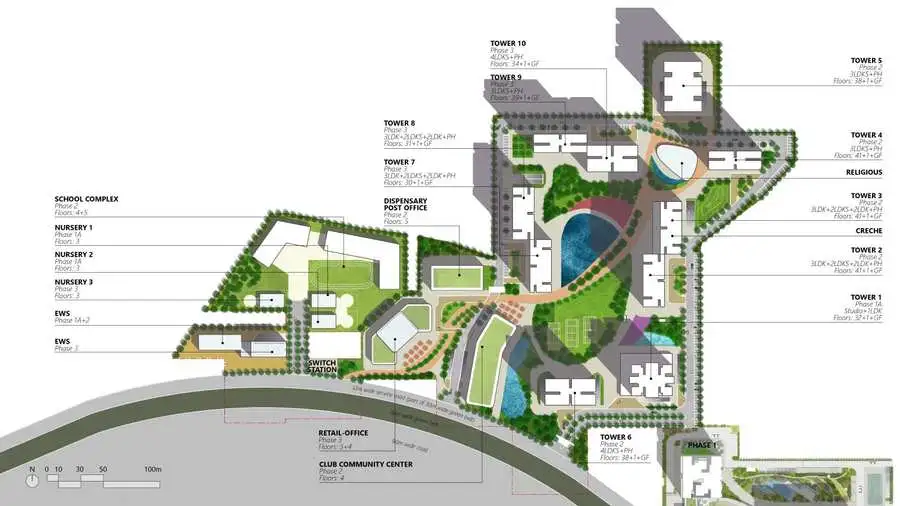
Home Krisumi City Sector 36A Master Plan Explained Ask five different people what “Krisumi” means in Gurgaon and you’ll likely get five different answers — a tower, a clubhouse, a “Japanese” project on the Dwarka Expressway. The confusion is understandable. Krisumi City isn’t a single building; it’s an evolving, multi-phase masterplan in Sector 36A, Gurgaon, and understanding how the pieces fit together makes it far easier to evaluate any individual project within it — whether that’s The Forest Reserve, Waterside Residences, or Waterfall Residences. This guide breaks down the Krisumi City master plan in plain language: who’s behind it, how it’s phased, what ties every project together, and how to think about it as a long-term address rather than a single launch. Who Is Behind Krisumi City? Krisumi City is developed by Krisumi Corporation, a joint venture between Sumitomo Corporation of Japan and Krishna Group of India — widely described as the first large-scale Indo-Japanese residential real estate partnership in the country. The name itself is a blend: “Kriya,” the Sanskrit word for creation, and “Sumi,” the Japanese word associated with refined, fine living. The architectural vision across the masterplan has been shaped by Nikken Sekkei, one of Japan’s most respected architecture and urban planning firms, with several phases also featuring interiors by Aoyama Nomura Design (A.N.D.). This isn’t a marketing label — it’s a consistent design thread that runs through every phase of the project, from tower massing to landscaping philosophy. The Big Picture: What Is Krisumi City, Exactly? Krisumi City is planned as a fully integrated urban development in Sector 36A — not just residential towers, but a mix of residential, office, retail, hospitality, education, and healthcare components, designed to function as a self-contained micro-city within Gurgaon’s larger Dwarka Expressway growth corridor. That’s an important distinction for buyers to understand: when you buy into any Krisumi residential project, you’re not just buying an apartment — you’re buying into a masterplan that’s designed to bring daily-use infrastructure (retail, schools, clinics, offices) within walking distance over time, in addition to the immediate residential clubhouse and landscaping. The Residential Phases of Krisumi City As of today, Krisumi City’s residential offering spans several distinct phases, each launched at a different stage of the masterplan’s evolution: 1. Krisumi Waterfall Residences — the flagship launch that introduced the market to Krisumi’s Japanese design language, its “Sudare” (water-inspired) clubhouse theme, and a 75:25 possession-linked payment plan. Spread across Towers A, B, and C, it offers 2, 3, and 4 BHK configurations, including a penthouse-with-private-pool option. 2. Krisumi Waterfall Suites and Waterfall Suites II — more compact studio and 1 LDK living formats within the same masterplan, designed for a different buyer profile than the larger family-format towers. 3. Krisumi Waterside Residences — the next major residential phase, designed by Nikken Sekkei with interiors by Aoyama Nomura Design, offering a wide configuration spread from 2 LDK through 3 LDK+S and penthouses, built around a “Cascade Clubhouse.” 4. Krisumi The Forest Reserve — the newest and most exclusive phase, limited to just two towers offering only 3 and 4 BHK residences, with one of the largest clubhouse footprints in the entire masterplan. Each phase shares the same underlying design DNA — Japanese landscaping, water features, wellness-first amenities — while targeting a slightly different configuration mix and price tier. Read our detailed comparison of The Forest Reserve, Waterside Residences, and Waterfall Residences if you’re trying to decide which specific phase suits your budget and family size. Location Within Sector 36A — Why It Matters Every phase of Krisumi City sits within the same broad location: Sector 36A, directly on or immediately adjoining the Dwarka Expressway. This gives the entire masterplan a consistent set of connectivity advantages: Fast, largely signal-free access to IGI Airport Direct road access via NH-48, Sohna Road, Golf Course Road Extension, and the Peripheral Road Proximity to Cyber City and Cyber Hub, Gurgaon’s largest commercial and employment hub Adjacency to the upcoming Global City project — a 1,000+ acre, government-backed mixed-use township being developed by HSIIDC across Sectors 36, 36B, 37, and 37B, with Phase 1 infrastructure targeted for completion by the end of 2026 Proximity to the Diplomatic Enclave-II, adding long-term institutional value to the belt Planned metro connectivity along the Dwarka Expressway corridor as regional transit expands Because Global City is being built out in phases immediately around Krisumi’s own masterplan, the two developments are often discussed together by analysts tracking the corridor — Krisumi residents stand to benefit directly from Global City’s commercial, retail, and transit infrastructure as it comes online over the next several years. Design Philosophy: What “Japanese Design” Actually Means Here It’s easy for “Japanese-inspired design” to become a vague marketing phrase, so it’s worth being specific about what it actually translates to across Krisumi City’s phases: Low-rise-to-high-rise density planning that prioritises open space and green cover over maximum saleable area Water as a design element, not just decoration — reflected in clubhouse names, landscaping themes, and façade treatments across multiple phases Light and shadow management in building orientation, corridors, and lobbies, rather than relying purely on artificial lighting Transitional spaces between indoor and outdoor areas, echoing the traditional Japanese engawa concept Contemplative, compact green pockets (tsuboniwa-style pocket gardens) tucked between built structures, rather than one large undifferentiated lawn Layered, quietly integrated security systems, rather than visibly intrusive barriers This design consistency across phases is one of the reasons Krisumi City functions more like a cohesive neighbourhood than a series of unrelated launches by the same builder. How the Masterplan Is Meant to Evolve Beyond the residential towers already launched, the broader Krisumi City vision includes commercial, retail, hospitality, and institutional components meant to be built out over time — following a similar phased-development logic to what’s happening next door at Global City. For buyers, this has two practical implications: Early-phase buyers benefit from long-term infrastructure build-out. As retail, schools, and commercial spaces mature within and around the masterplan, daily convenience for residents typically improves — a